
 sales@adkosun.com
Why Every Drilling Operation Needs a Decanter Centrifuge
In modern oil and gas drilling, managing drilling fluids efficiently is critical for:
✔ Cost Reduction – Recovers 90%+ of barite for reuse, saving $150K+ per well
✔ Environmental Compliance – Reduces oil-on-cuttings (OOC) to <1%, meeting EPA/MARPOL standards
✔ Performance Optimization – Maintains ideal mud weight and viscosity for faster ROP (Rate of Penetration)
A drilling fluids decanter centrifuge removes 2-7 micron solids – the fines that shale shakers and hydrocyclones miss.
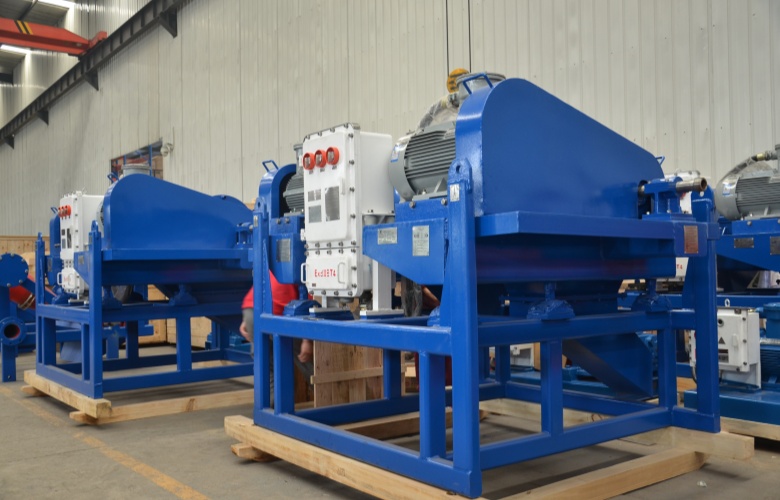
How It Works: 3-Stage Separation Process
-
Feed Inlet – Drilling fluid enters the rotating bowl (1,500-4,000 RPM)
-
G-Force Separation – Solids settle against bowl wall (2,000-4,000 Gs)
-
Dual Discharge – Dry solids ejected via scroll conveyor; clean fluid overflows
Key Components:
-
Bowl: 316L stainless steel for corrosion resistance
-
VFD Control: Adjusts speed for different mud types
-
Wear Protection: Tungsten carbide tiles in abrasive applications
Top 5 Applications in Drilling Operations
| Application | Benefit | Recommended Model |
|---|---|---|
| Weighted Mud Systems | Recovers API-grade barite | High-G (≥3,500 RPM) |
| Offshore Rigs | Compact, explosion-proof design | Marine-certified units |
| Directional Wells | Prevents stuck pipe | Variable-speed models |
| Cuttings Processing | Reduces OOC for disposal | 3-phase separation |
| Waste Minimization | Cuts slurry volume by 70% | High-capacity bowls |