
 sales@adkosun.com
Solid-liquid separation is a fundamental process in various industries, including chemical engineering, wastewater treatment,
mining, pharmaceuticals, and food processing. It involves the separation of suspended solid particles from a liquid phase to achieve purification,
concentration, or recycling of materials. This article explores common techniques, applications, and recent advancements in solid-liquid separation.
Common Techniques for Solid-Liquid Separation
1. Filtration
Filtration is one of the most widely used methods, where a porous medium (e.g., filter paper, membrane, or cloth) retains solid particles while allowing the liquid to pass through.
-
Gravity Filtration: Relies on natural gravitational force (e.g., sand filters in water treatment).
-
Vacuum Filtration: Enhances separation using suction (e.g., rotary drum filters in mining).
-
Pressure Filtration: Uses high pressure to force liquid through a filter (e.g., plate-and-frame filters in chemical processing).
-
-
2. Centrifugation
Centrifugation employs centrifugal force to separate denser solids from liquids. Common types include:
-
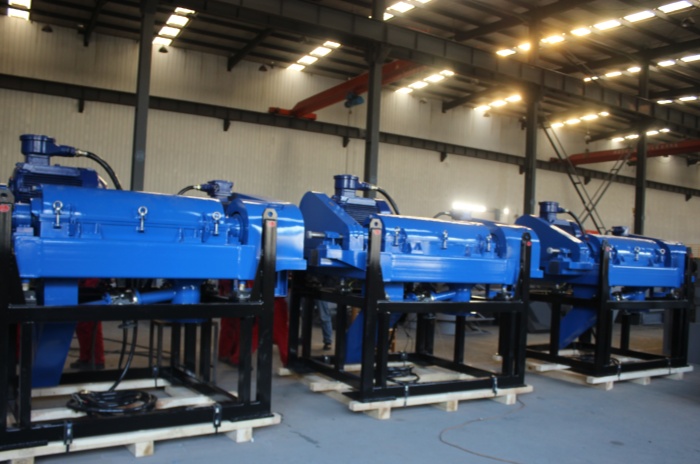
Sedimentation Centrifuges: Separate particles based on density differences (e.g., decanter centrifuges in wastewater sludge treatment).
-
Filtering Centrifuges: Combine centrifugal force with filtration (e.g., basket centrifuges in pharmaceutical production).
-
3. Sedimentation
Sedimentation relies on gravity to allow solid particles to settle at the bottom of a tank. It is often used in:
-
Clarifiers (e.g., in municipal water treatment plants).
-
Thickeners (e.g., in mineral processing to concentrate slurries).
-
4. Flotation
Flotation introduces air bubbles to attach to solid particles, causing them to rise to the surface for removal. This method is common in:
-
Mineral processing (e.g., separating valuable ores from gangue).
-
Wastewater treatment (e.g., dissolved air flotation for sludge removal).
-
5. Membrane Separation
Advanced membrane technologies, such as microfiltration, ultrafiltration, and reverse osmosis, are used for fine solid-liquid separations in:
-
Food & Beverage Industry (e.g., milk clarification).
-
Biotechnology (e.g., protein purification).
Applications of Solid-Liquid Separation
-
Water & Wastewater Treatment: Removing suspended solids, sludge dewatering.
-
Mining & Minerals: Concentrating ores, tailings management.
-
Pharmaceuticals: Purifying active ingredients, sterile filtration.
-
Food Industry: Clarifying juices, extracting oils.
-
Chemical Manufacturing: Catalyst recovery, product purification.
Recent Advances
-
Electrocoagulation & Electroflotation: Using electrical currents to enhance particle aggregation and separation.
-
Nanofiltration & Advanced Membranes: Improving efficiency in removing nanoparticles and macromolecules.
-
Automated & AI-Enhanced Systems: Optimizing separation processes using real-time monitoring and machine learning.
-
Sustainable Methods: Reducing energy consumption and waste generation (e.g., hybrid systems combining centrifugation and filtration).